 11
11
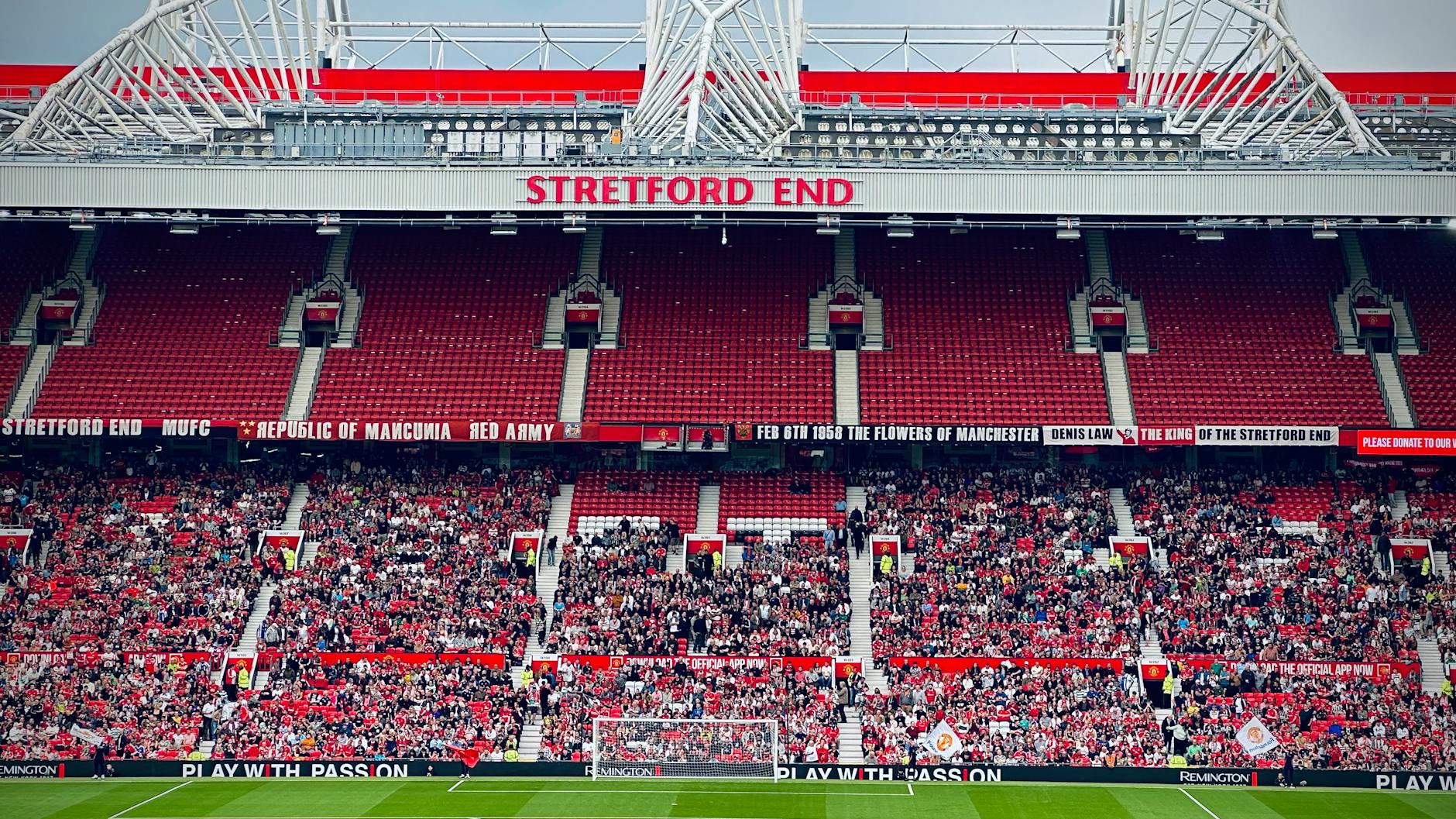
On a recent Sunday, a compelling Premier League encounter unfolded at Old Trafford between Manchester United and Crystal Palace, where crucial moments were significantly influenced by the Video Assistant Referee (VAR). The match, which ultimately saw Manchester United secure a victory, became a focal point for discussions surrounding officiating decisions. The outcome, as well as several pivotal in-game narratives, were heavily shaped by multiple VAR reviews, particularly concerning a red card incident involving Manchester United’s Casemiro and decisive penalty calls. These interventions underscored the ongoing and often impactful role of VAR in modern football, aiming to enhance accuracy in high-stakes situations.
Midway through the second half, the fixture intensified following a challenge on Manchester United’s Antony, which quickly escalated into a widespread scuffle involving players from both teams. Amidst the chaos, Manchester United midfielder Casemiro was observed placing his hands around the throat of Crystal Palace midfielder Will Hughes. Initially, the on-field referee, Andre Marriner, assessed the incident and issued a yellow card to Casemiro for his involvement. However, the situation was not concluded there. The VAR, Tony Harrington, initiated a review, recommending that Marriner examine the incident more closely for potential violent conduct. Upon reviewing the pitchside monitor, Marriner reconsidered his initial decision and upgraded the punishment, issuing a straight red card to Casemiro for serious foul play. The comprehensive VAR review determined that Casemiro’s actions constituted violent conduct, a clear breach of football’s rules, leading to his immediate dismissal and a subsequent three-match suspension. This specific VAR review highlighted the technology’s capacity to intervene decisively and penalize actions that might have been missed or misjudged in the fast-paced, real-time environment of a live match.
Earlier in the game, Manchester United was awarded a penalty that significantly altered the match’s dynamic. An incident occurred where Marcus Rashford was fouled inside the penalty area by Crystal Palace’s Jeffrey Schlupp. Initially, referee Marriner allowed play to continue, indicating no foul. However, the VAR officials stepped in, conducting a thorough VAR review. This review clearly indicated a foul within the penalty area, prompting Marriner to reverse his original decision and point to the spot. Bruno Fernandes subsequently converted the penalty, providing Manchester United with a crucial lead. In contrast, Crystal Palace also had a strong appeal for a penalty involving their influential forward, Wilfried Zaha. Zaha went down under a challenge from Manchester United’s Aaron Wan-Bissaka. Despite Crystal Palace’s appeals for a foul, the referee again allowed play to continue. The subsequent VAR review confirmed that Wan-Bissaka’s challenge was deemed fair. Replays indicated that Zaha initiated contact with the ball after Wan-Bissaka, supporting the decision not to award a penalty. This instance demonstrated the dual function of VAR in both awarding and denying penalties to ensure the correct application of the laws of the game.
The Manchester United vs. Crystal Palace fixture served as a pertinent case study for the application and impact of VAR review technology in the Premier League. From a game-changing red card that reduced Manchester United to ten men, to decisive penalty calls that directly influenced the scoreline, VAR played an undeniable and critical role in shaping the match’s narrative and its ultimate outcome. While discussions and debates surrounding VAR’s implementation persist among fans and pundits, the technology’s ability to scrutinize incidents with greater precision and offer an additional layer of scrutiny remains a central feature of top-tier football officiating, influencing critical decisions that directly impact results and league standings.
Image by: Mohameden 📸 beinbe
https://www.pexels.com/@mohameden-beinbe-1070887628