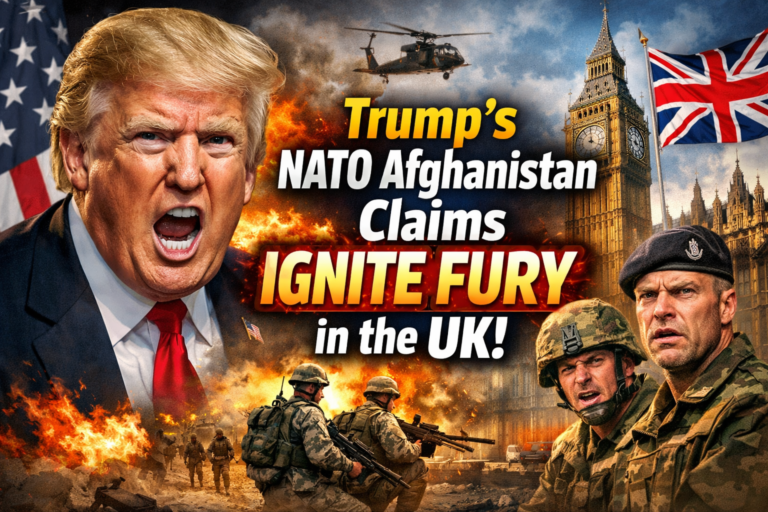
Former President Donald Trump’s recent assertions that NATO troops, specifically those from non-US member states, deliberately avoided the front lines in Afghanistan have ignited a firestorm of condemnation, particularly across the United Kingdom. This provocative claim, made during a campaign rally, struck a raw nerve, challenging the integrity and courage of allied forces who served and sacrificed alongside American soldiers for two decades. The immediate backlash from British politicians, military veterans, and the public underscores the deep emotional resonance of the Afghanistan conflict within the UK, where the cost in lives and profound injuries remains a solemn national memory. Trump’s remarks, echoing past criticisms of NATO allies’ contributions, have been widely interpreted not just as an insult to military service but as a misrepresentation of a complex, multinational effort to combat terrorism and stabilize a volatile region.
British forces, forming a significant contingent of the International Security Assistance Force (ISAF) and later Operation Resolute Support, bore a heavy burden in some of Afghanistan’s most dangerous provinces, notably Helmand. For years, UK soldiers were engaged in intense combat operations, facing relentless insurgency and suffering substantial casualties. The notion that these troops shirked responsibility or deliberately sought safer assignments is not only factually inaccurate but deeply offensive to those who served and their families. Their bravery and dedication were consistently lauded by US commanders and fellow NATO members. The outrage in the UK stems from a profound sense of injustice, as Trump’s comments appear to diminish the immense sacrifices made and rewrite a difficult chapter of shared military history, disregarding the thousands of British personnel who risked and often gave their lives in the pursuit of common security objectives. This historical revisionism has united figures across the British political spectrum in their defense of the armed forces, highlighting the bipartisan respect for military service.
Beyond the immediate affront to British troops, Trump’s remarks reignite broader debates surrounding burden-sharing within NATO and the value of collective defense. While he has frequently criticized allies for not meeting defense spending targets, this particular accusation goes further, questioning the operational commitment and courage of their soldiers. Such rhetoric risks undermining the very foundations of the transatlantic alliance, fostering mistrust and resentment at a time when global stability faces renewed challenges. For the UK, a steadfast US ally for generations, these comments are particularly grating, coming from a figure who has openly questioned the utility of NATO. The implications for future US-UK relations, especially in a potential second Trump presidency, are not lost on observers. The incident serves as a stark reminder of how political rhetoric, even from a former leader, can profoundly impact international partnerships and the morale of service members.
The reaction from British veterans has been particularly poignant, with many expressing deep hurt and anger at the perceived disregard for their service. Their testimonials powerfully counter Trump’s narrative, emphasizing the shared experiences, dangers, and camaraderie forged on the battlefields of Afghanistan. For them, the comments are not merely political posturing but a direct challenge to their honor and the sacrifices of their fallen comrades. This strong emotional response highlights the enduring bond between nations that fight side-by-side and the sensitivity around military service. The widespread condemnation across the UK signals a unified front in defending the integrity of its armed forces and their vital role in international security operations. Ultimately, Trump’s claim has not only sparked outrage but has also served as a powerful testament to the enduring respect and gratitude the British public holds for its service personnel, reinforcing the collective memory of their dedication in Afghanistan.
About the Author